Why EOFY matters for precious metals investors
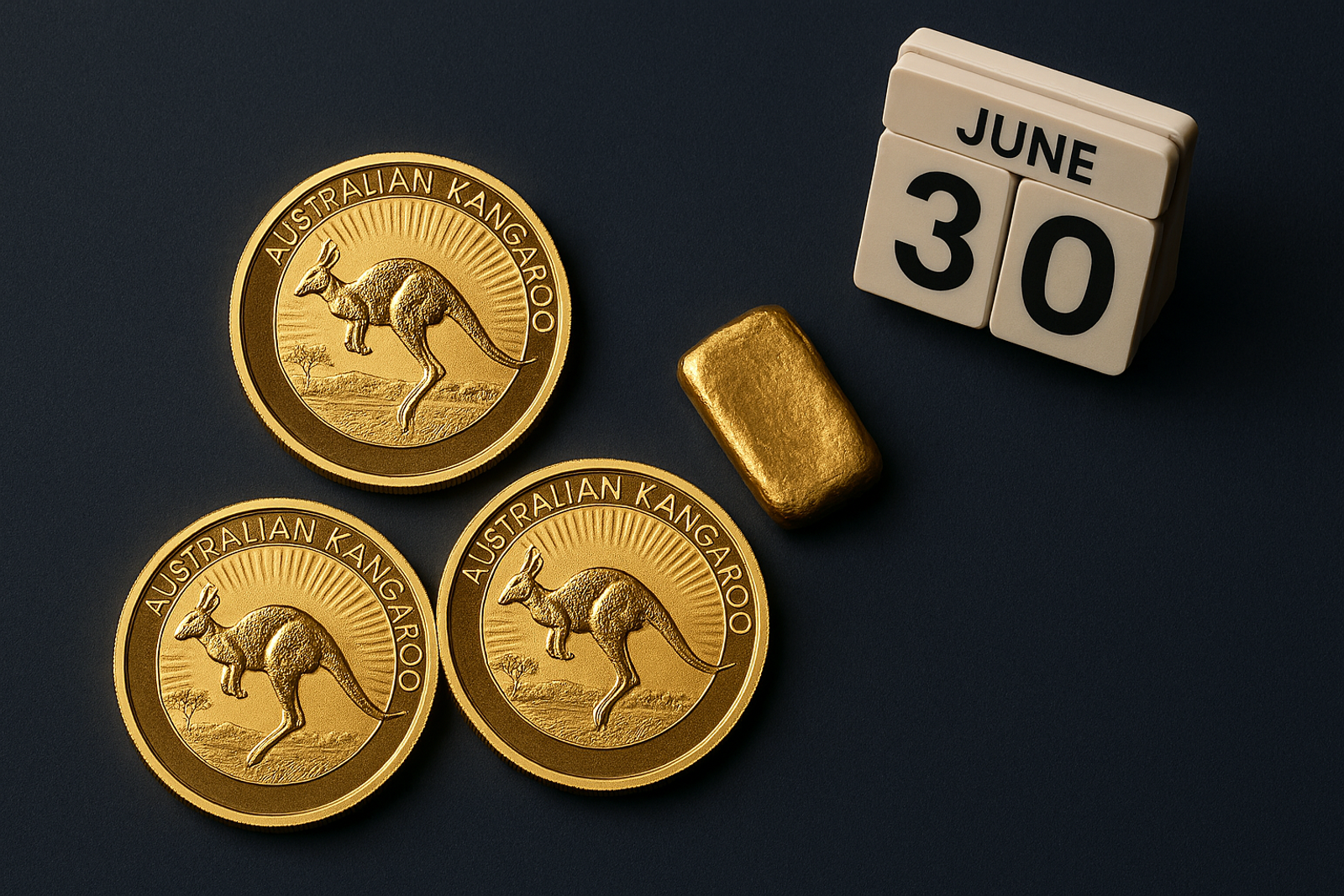
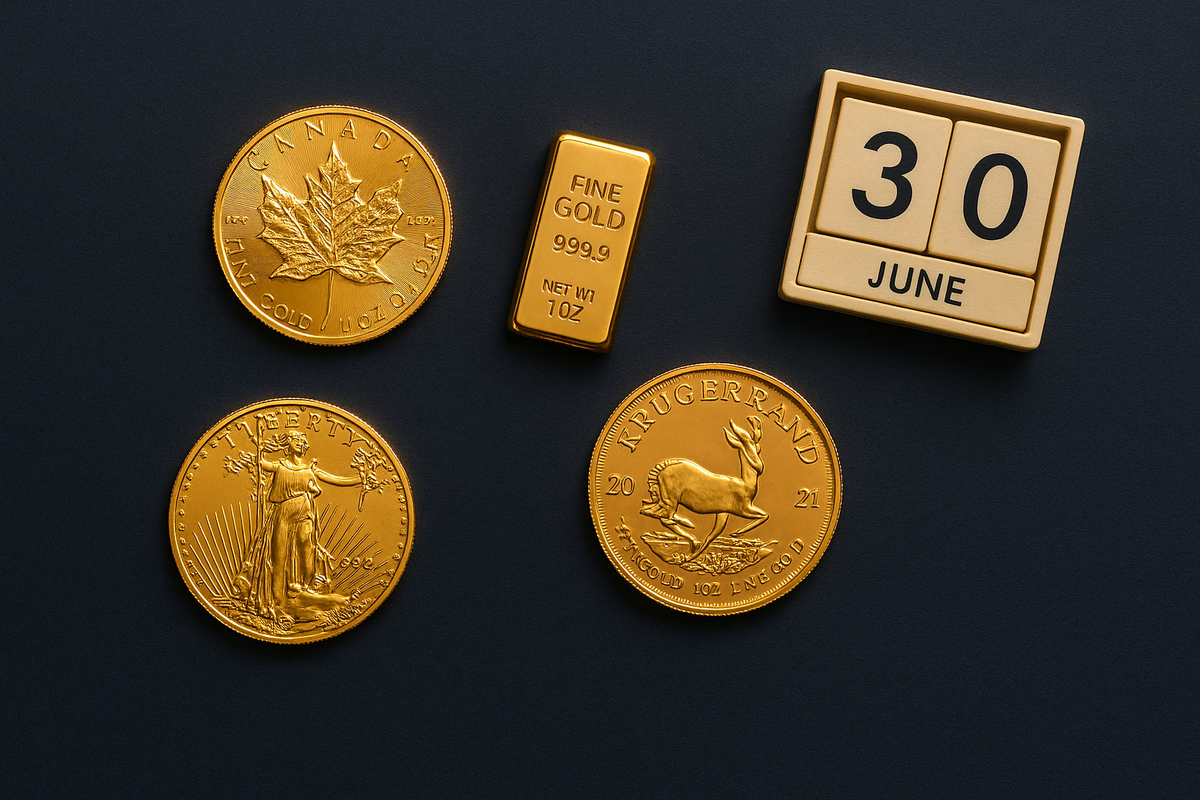
The end of the financial year on 30 June is an important date for every Australian who holds physical gold or silver. Whether you bought your first 1oz gold Kangaroo coin last year or have been building a position for a decade, the financial year boundary affects your capital gains tax (CGT) position.
This article covers the key considerations for precious metals investors as 30 June 2026 approaches. It is general information only. It is not financial advice, tax advice, or legal advice. Tax outcomes depend on individual circumstances. Consult a qualified tax adviser or accountant before making any decisions.
Capital gains tax on gold and silver in Australia
Gold and silver bullion are capital assets for Australian tax purposes. When you sell at a profit, you may have a capital gain. When you sell at a loss, you have a capital loss. For a comprehensive overview, see our capital gains tax guide for gold and silver.
Gold bullion, including bars and investment-grade coins, is generally GST-exempt in Australia. The price you paid including any dealer premium is your cost base without further adjustment. Silver bullion is not GST-exempt. The 10% GST you paid at purchase is included in your cost base, which reduces the net taxable gain on sale.
Coins traded predominantly as collectables or numismatic items are treated differently under CGT compared to standard bullion coins. The Perth Mint Kangaroo coin and similar investment-grade products are generally treated as investment assets, not collectables. See the ATO website and our CGT guide for the full distinction.
The 12-month CGT discount
The most important rule for precious metals investors at EOFY is the 50% CGT discount. If you are an individual or trust and you held a CGT asset for at least 12 months before disposal, only half the capital gain is included in your assessable income. Superannuation funds receive a one-third discount.
The 12-month clock starts on the date of purchase. It does not start from the settlement date or when you took physical delivery.
For gold purchased in late May or June 2025, EOFY 2026 is the first year the discount becomes available. Selling a few weeks too early could double the taxable gain on that parcel. Check purchase dates carefully before transacting around EOFY.
For gold purchased before June 2025, which includes most long-term holders, the discount will apply on any realised gains. See the CGT discount explainer for worked examples.
Record keeping before 30 June
The ATO requires records for all CGT assets. For physical precious metals, the key records are the purchase invoice showing the price paid including any premium and GST, the purchase date, the name of the dealer, and your sale receipt when you eventually dispose of the asset.
If you have accumulated bullion from multiple purchases, for example buying a few Kangaroo coins each year, each parcel has its own cost base and its own 12-month clock. Separate records for each purchase let you apply the most tax-effective cost base method on disposal.
Storage and insurance costs for investment bullion may be deductible as investment expenses. Keep records of vault storage fees, insurance premiums, and costs associated with purchasing including shipping and transit insurance.
If you have lost purchase invoices, contact your dealer. Most major Australian bullion dealers are listed in our dealer comparison guide and can reissue records on request. Use the live gold price or silver price as a spot reference if you need to verify prevailing prices at the time of purchase.
Timing a sale before or after 30 June
A capital gain is recognised in the income year in which the contract for sale is entered into. The settlement date does not determine the income year. If you sign a sale agreement on 29 June, the gain falls in the 2025 to 26 year even if funds arrive in July.
Some investors consider timing a sale based on their expected income in each financial year. If your taxable income in 2025 to 26 is lower than your projected 2026 to 27 income, crystallising a gain before 30 June may mean a lower marginal tax rate applies. The reverse may also be true.
This calculation depends entirely on your tax bracket, other income sources, and any available capital losses. It is not a recommendation to buy or sell. It is a variable worth discussing with your accountant before transacting.
Check today's gold price or silver price to assess whether you are in a gain or loss position before deciding.
Using capital losses before EOFY
Capital losses can only be offset against capital gains. They cannot reduce ordinary income. Losses that exceed gains in a given year carry forward indefinitely and can be applied against future capital gains.
If you have unrealised losses on any CGT assets, whether shares, property, or precious metals, EOFY is a common time to consider crystallising those losses to offset gains from other assets in the same year.
Be aware of the ATO's wash sale provisions. You cannot immediately repurchase the same or a substantially identical asset solely to manufacture a loss while maintaining the same economic exposure. The ATO actively scrutinises EOFY wash sales and can disregard them.
For a full explanation of how gains and losses interact for precious metals, the CGT guide covers the mechanics in detail.
Gold market context heading into June 2026
Gold prices in 2026 have remained elevated, with the Australian dollar gold price trading well above historical averages. Investors who purchased gold from 2022 to 2024 are typically sitting on substantial unrealised gains.
Most long-term holders will have exceeded the 12-month threshold, making them eligible for the 50% CGT discount on any gains realised. The size of the gain matters for planning purposes, not just eligibility for the discount.
For current spot pricing, the live gold price tracker on this site shows buy and sell prices from major Australian dealers throughout trading hours.
Silver at EOFY: the GST factor
Silver's tax treatment differs from gold in one key way. Silver bullion is subject to 10% GST on purchase, and that GST forms part of your cost base.
If you paid $50 per ounce for silver inclusive of GST, your cost base is $50. When you sell at $60, the gain is $10 per ounce. Keeping GST-inclusive purchase invoices for all silver purchases is essential to correctly calculate this.
The current silver price on this site shows live buy prices across Australian dealers, which can help you assess whether you are in a gain or loss position.
Silver capital losses can be offset against gold capital gains and vice versa, since both are CGT assets. If you hold both metals, maintain separate records for each metal and each purchase date.
CGT changes on the horizon for 2027
The Australian Government has flagged potential changes to capital gains tax settings that may take effect from 2027. Legislation has not yet passed, but the proposals under discussion could affect the CGT discount rate or the treatment of investment assets for higher-income earners.
The current rules, including the 50% individual CGT discount, remain in effect for all disposals in the 2025 to 26 financial year.
We will update the gold and silver CGT guide as any changes are confirmed. If you are holding precious metals with a view to selling in the next one to two years, it is worth raising the proposed CGT changes with your tax adviser when planning the timing of any disposal.
General information only
This article is general information only. It does not constitute financial advice, investment advice, tax advice, or legal advice. Tax outcomes depend on your individual circumstances, the type of entity holding the assets, your residency status, and the applicable legislation at the time of disposal.
Always consult a registered tax adviser, accountant, or licensed financial planner before making investment or tax decisions. For authoritative guidance, refer to the ATO website and our regularly updated gold and silver CGT guide.
Gold prices and silver prices shown on this website are indicative only and sourced directly from Australian bullion dealers.